







.png)

Black Friday Cyber Monday (BFCM) 2025 made one thing pretty clear: shoppers were paying attention, just not to everything.
Promotions started early, inboxes filled up, and shoppers had more than enough opportunities to spend. But after looking at more than 200 billion impressions powered by Movable Ink during the 2025 holiday season, we saw just how selective shoppers had become. Simply showing up wasn’t enough to win them over.
Click rates and average order values were up. But shoppers were also willing to wait, compare their options, and hold off until the right offer came along.
As marketers head into BFCM 2026, that distinction matters. Getting a message in front of someone is one thing. Giving them a reason to care is another.
Here’s what last year can teach us about doing the latter.
1. Being early doesn’t guarantee you’ll get the sale.
Thanksgiving falls late again this year, landing on November 26 and leaving marketers with another tight stretch between Cyber 5 and Christmas. If last year is any indication, that could mean Black Friday promotions start showing up well before the day actually rolls around.
But 2025 gave us a good reason not to confuse an early start with an early sale.
Pre-Thanksgiving click rates climbed year over year, showing plenty of interest in those early offers. Conversions, however, didn’t follow at the same pace. Instead, more shopping activity shifted toward Thanksgiving week, with 10% of pre-Thanksgiving conversions moving into the Monday through Wednesday lead-in to the holiday.
Shoppers weren’t ignoring early promotions, but rather using them to look around.
That’s worth keeping in mind as marketers map out this year’s calendar. Starting early can give shoppers more time to discover products, compare prices, and figure out what they want. But repeating the same offer for weeks gives them fewer reasons to keep paying attention.
The lead-up to BFCM can also tell you a lot about what someone may be interested in once the biggest shopping days arrive. The categories they browse, products they click, items they leave behind, and offers that catch their eye can all help shape what they see next.
By the time peak arrives, you’re not starting from scratch and you have a much better idea of what might bring them back.
2. A sitewide offer can be broad. The experience around it shouldn’t be.

There’s a reason sitewide discounts are a BFCM staple. When a retailer is offering 20% off everything, the promotion really is for everyone.
But the products that make that 20% off interesting are different for every shopper.
DSW put that idea into practice by using behavioral data to personalize the calls to action shoppers saw. Someone browsing boots could be pointed toward boots, while another shopper’s experience could reflect the categories they had been exploring.
The promotion stayed broad, but the path into it became personal.
That approach helped DSW drive a 6.4% increase in revenue.
It’s a useful reminder heading into this year’s peak season: personalization doesn’t have to mean creating a different promotion for every person. Sometimes it means making the promotion you already have more relevant to the person seeing it.
That can be as straightforward as resurfacing recently browsed products, prioritizing categories based on affinity, showing what’s trending for a particular shopper, or making savings easier to see on products they’ve already shown an interest in.
When nearly every brand is talking about a deal, relevance gives shoppers a reason to pay attention to yours.
3. Value needs to be obvious, not buried.

Shoppers didn’t stop spending in 2025. In fact, average order value during Cyber 5 increased 16% year over year.
But they were more deliberate about when that spending happened.
Conversion rates started slowly before finishing strong, while Cyber Monday once again claimed the highest share of Cyber 5 conversions. The pattern points to shoppers who were engaged throughout the period but willing to wait for the offer they believed gave them the most value.
That makes the way marketers communicate value just as important as the discount itself.
Overstock, for example, resurfaced products customers had previously browsed alongside personalized, in-stock recommendations. Each product included up-to-date pricing and strikethroughs that made the savings immediately clear.
There was no extra work required from the shopper to figure out whether the deal was worth another look.
That’s especially important during BFCM, when comparison shopping is practically part of the experience. Live pricing, clear savings, relevant recommendations, low-stock messaging, and offer deadlines can all help answer the question shoppers are already asking: Why should I buy this now?
4. The inbox isn’t the only place competing for attention.
Last year, shoppers split their browsing surprisingly evenly between desktop and mobile during Cyber 5. But when it came time to buy, mobile pulled ahead.
Sixty-four percent of Cyber 5 conversions came from mobile, and mobile also led average order value.
That creates an opportunity beyond simply making an email mobile-friendly. If shoppers are already moving between inboxes, apps, texts, websites, and physical stores throughout the weekend, the experience can move with them.
DSW used abandoned-cart rich push notifications featuring dynamic images of the exact products shoppers had left behind. Compared with a static version, the campaign increased revenue by 17%.
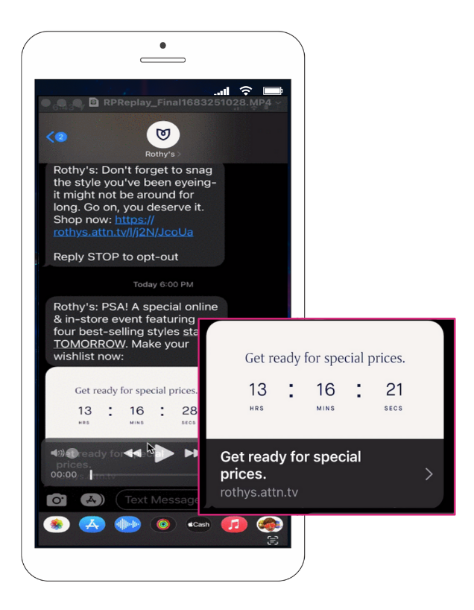
Rothy’s used SMS countdown timers that refreshed whenever a shopper reopened the message, keeping an upcoming offer current without requiring another send.
The goal isn’t to be everywhere, but to show up where it makes the most sense for the shopper.
A shopper casually browsing earlier in the week may respond to an email full of personalized discovery. Someone with an item sitting in their cart on Black Friday may need a much simpler reminder on their phone.
Attention changes throughout the shopping journey. The message can change with it.
5. More sends aren’t always the answer.
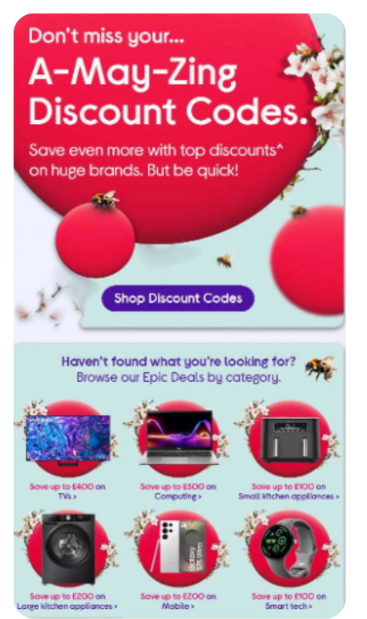
Peak season creates an understandable temptation: if everyone else is sending more, you probably should too.
Last year gave us a good reason to question that assumption.
For Currys, that meant moving away from another static blast to the full list. Using Da Vinci, the team spread the campaign over two weeks and focused sends on customers who were more likely to engage, nearly halving the recipient list while increasing click-to-conversion rate by 1.2x and revenue per 1,000 sends by 8.6x.
That kind of decisioning is especially top of mind at Movable Ink as we head into BFCM 2026. With Programmatic CRM, the focus shifts away from manually deciding who gets each campaign and toward AI helping determine what should happen next for each customer, while marketers set the strategy, content, and guardrails.
During peak season, that could mean thinking less about how many messages can fit into the calendar and more about which messages deserve to be sent, who is most likely to care, and when they’re most likely to engage.
When every brand is competing for attention, making each message count matters a lot more than adding another one to the calendar.
What should marketers take into BFCM 2026?
Last year’s shoppers weren’t disengaged. Quite the opposite.
They clicked, browsed, compared, and waited. When the value and timing lined up, they spent.
That makes attention a more useful goal than sheer visibility heading into BFCM 2026.
Start early if it gives shoppers something new to discover. Personalize broad promotions around what each person cares about. Make value easy to understand. Use mobile when the moment calls for it. And don’t mistake another send for another opportunity to connect.
Shoppers will see thousands of messages this BFCM. They won’t remember most of them. Give them a reason to think back to yours.

.png)
.png)

.png)


