Ready or Not, Here Comes 2026: What Marketers Need to Prepare For
|
December 11, 2025
Share
LinkedIn
X
Email
Copy URL
Copy Page
Open in ChatGPT
Open in Claude
HIGHLIGHTS
• 2026 brings AI fully into the workflow, taking on execution so marketers can focus on intent and impact. • Expect connected ecosystems to outrun all-in-one platforms as teams choose flexibility over force-fits. • Marketers step into the role of AI directors, shaping how tools think, create, and decide. • Budgets tighten, trust matters, and data has to deliver. Personalization in 2026 will demand proof, not promises.
Marketers are heading into 2026 with clearer expectations, tighter resources, and far more intelligent tools. AI is no longer the shiny add-on. It’s becoming part of everyday workflow. Data is moving more freely across systems and we expect personalization to truly reflect the way customers behave.
Movable Ink’s Product Marketing and Strategy teams shared their predictions for the year ahead. The big picture is clear. Marketing is about to feel more intuitive, connected, and personal, even as AI handles more of the operational work.
Here’s what to expect.
1. AI will continue to be a team player.
In 2026, AI will take on the routine parts of campaign building so marketers can focus on strategy, creative intent, and brand stewardship. Tasks that once required long workflows will shift to agentic systems that know how to generate content, test variations, and determine who should receive what and when.
In 2026, up to 75% of the traditional marketing campaign workflow will be automated with AI and Agents.
Andrew LeClair
Senior Director, Product Marketing
Rather than hunting through settings, marketers will speak to their tools the same way they speak to teammates. AI will answer with recommendations, options, and next steps.
Marketers will increasingly interact with tools through conversational and predictive interfaces instead of dashboards and screens filled with buttons and drop-down menus.
T.J. Prebil
Director, Product Marketing
Creative work gets an upgrade too. AI will support fast generation of variations while marketers decide what feels right for the brand. Marketers stay in the loop. AI simply removes the busywork.
Creative generation and using AI to create variations will become the norm.
Erica Dingman
Associate Director, Product Marketing
2. Connected ecosystems will take priority over all-in-one platforms.
The idea of a single platform that does everything is losing steam. Teams want flexibility. They want tools that excel at their specific purpose and connect smoothly with everything else.
By 2026, the most forward-thinking brands will abandon one-size-fits-all suites in favor of connected marketing ecosystems, a network of best-in-class partners that collaborate seamlessly through APIs and AI.
Monica Mahale
Director, Product Marketing
3. AI literacy will become essential for every marketer.
AI is reshaping what marketing teams are expected to know. Understanding how to prompt, guide, and correct AI will become as important as understanding a brief.
Leadership teams are learning more too, which means more support for training, education, and experimentation. The teams that know how to tune AI to their brand’s standards will stand out.
We will move from being AI users to AI directors.
Alex Manly
Senior Director, Strategy
3. AI investment will need to prove its value and protect trust.
The era of unlimited experimental budgets is ending. In 2026, AI must show real, measurable outcomes while maintaining privacy and customer trust.
Marketers will need frameworks that evaluate performance in a way that is both rigorous and responsible. Privacy requirements will continue to shape how AI is tested, measured, and deployed.
The ‘blank-check’ era of AI investment will end in 2026.
Tiffany Fitzgerald
Director, Strategy
4. Diversity will become a business requirement, not a side note.
The teams shaping AI and customer experiences must reflect the customers they serve. When they do not, the cost is immediate and measurable. epresentation is not only ethical. It affects how products work, how campaigns land, and how customers respond. 2026 will push organizations to elevate underrepresented voices and build more inclusive environments across MarTech.
“Bias in building your teams equals a direct penalty on your bottom line." Alex Manly, Senior Director, Strategy
The 2025 BFCM results are in.
Get a breakdown of the spikes, the stalls, and the surprises that shaped the rush.
A split customer base and a deeper reliance on first-party data.
Retail will continue to feel uneven as shoppers respond differently to economic pressures. Luxury and value-driven brands will hold their footing while mid-tier players work to reintroduce their relevance.
We will likely continue seeing the bifurcation between affluent and lower-class households, which could directly impact winners and losers within retail.
Ron Hay
Director, Strategy
Retailers will treat first-party data as a core asset, not just a helpful add-on. Capturing zero-party data like polls and quizzes will help teams understand customer intent in a more direct way — giving brands a blend of what customers choose to share and the behaviors they naturally reveal.
As that data foundation strengthens, first-party signals will become the engine behind better targeting and new revenue streams, including the continued rise of retail media networks.
More emphasis on first-party data use. We will see retailers creating robust media networks that use their first-party data to optimize both targeting and further monetize ad buys.
Kelsey Organ
Asscoiate Director, Strategy
One brand already putting these signals to work is Charlotte Tilbury. Their team built a dynamic behavioral banner that spotlighted each shopper’s most recently browsed product — or surfaced a best-seller when no browsing data was available. They reused this same trigger across newsletters, launches, and promotional sends, creating a familiar, intuitive moment of personalization wherever the customer showed up. That consistency paid off: the brand saw a 42% lift in conversions and a 31% lift in sales, a clear reminder of how powerful the right data can be when it’s used with intention.
✈️ Travel and Hospitality
Personalized trips and shorter booking windows.
Travel demand remains high, but behavior continues to shift. Economic uncertainty has shortened booking windows and increased interest in more budget-friendly options.
Given the ongoing economic uncertainty, travelers will continue to book trips closer in.
Patrick Hamilton
Director, Strategy
AI will keep shaping how people explore destinations — not by nudging them toward whatever they saw online, but by helping them build trips that fit their budget, comfort level, and personal tastes. And as wallets tighten, loyalty redemptions will continue to climb as a simple way to soften the cost of travel.
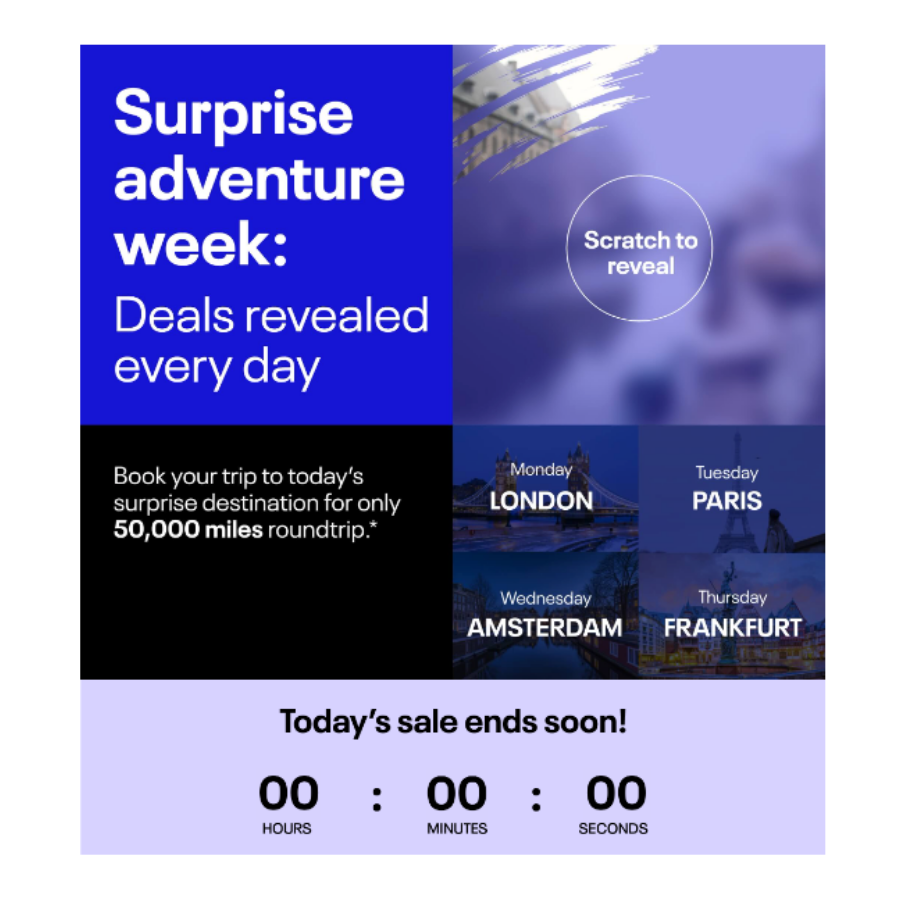
A great example of this in action comes from United, which leaned into gamification to spark interest during a slower travel period. Their “Surprise Adventure Week” campaign used MI’s time-targeting features to roll out daily scratch-off moments that revealed new deals each morning. Each offer brought in fresh images and destinations, and countdown timers added a little urgency to keep travelers clicking in.
The approach paid off: click-throughs surged, and the campaign delivered a 2,000% lift in rewards bookings.
📺 Media and Tech
Connection becomes the real differentiator.
With subscription fatigue growing, brands will lean into conversations that feel personal, warm, and human. Rich Communication Services (RCS) is positioned to play a significant role.
“After a period of slow adoption, RCS will emerge as a premium experimentation channel where Media and Tech brands test emotionally intelligent, human-feeling conversations.” Tiffany Fitzgerald, Director, Strategy
Retention efforts will hinge less on splashy discounts and more on moments that deepen connection — moments that help people discover something new, feel seen, or feel understood.
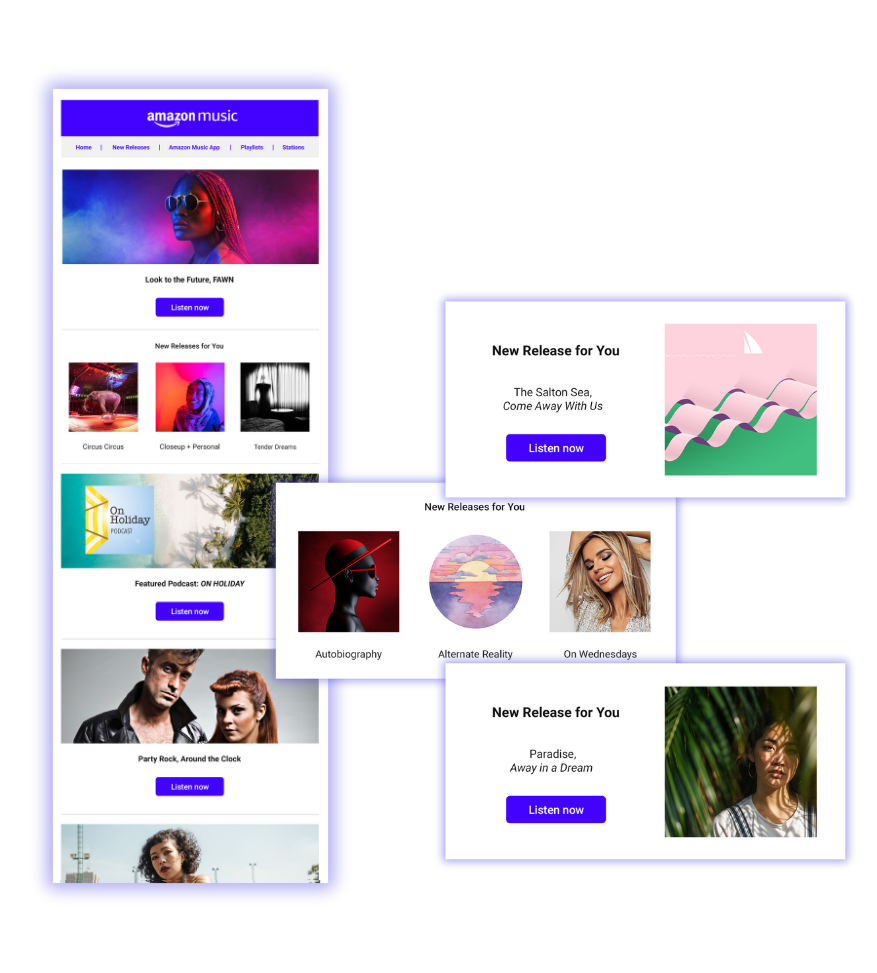
You can see this shift in motion with Amazon Music. They replaced their generic “New Releases” module with hyper-relevant recommendations tailored to each listener. Using Movable Ink and a custom API integration, the team delivered millions of dynamic variations featuring fresh tracks and albums in real time. No manual work, no stale playlists.
The payoff was huge: the experience drove a 682% lift in click-through rate, proof that when content feels made for you, you want to engage with it.
💳 Financial Services
Mobile takes center stage.
Mobile is the primary channel for banking. That trend is not slowing down. The challenge for traditional banks is stitching together mobile, web, and in-branch experiences so they feel unified instead of disjointed.
With 74% of banking interactions happening on mobile devices, digital-first savings and checking products will continue to capture market share from traditional banks.
Robbie Freeman
Director, Strategy
As customers rely on mobile for more of their financial lives, personalization will play a bigger role. People want clarity, convenience, and reassurance from every touchpoint, especially the ones they carry in their pocket.
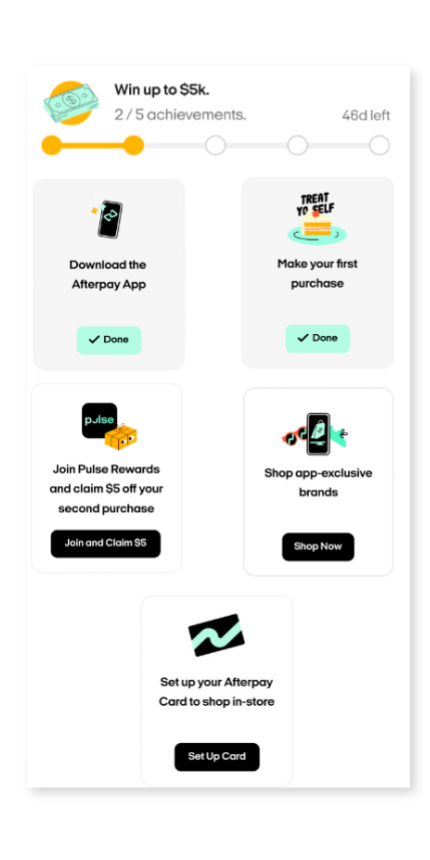
A great example of this shift comes from Afterpay, which reimagined its welcome series with a playful 60-Day Challenge. Customers earned a sweepstakes entry by completing five engagement tasks, each one revealed and tracked through real-time emails and mobile banners. One of those key tasks was downloading the Afterpay app, helping new users quickly build the habit of managing their activity on mobile.
Looking Ahead
2026 will be a year defined by clarity. AI will take on more execution so marketers can spend their time on decisions that matter. Connected ecosystems will replace the pressure to force everything into one tool. Personalization will feel more natural and less mechanical. And the teams who succeed will be the ones who stay curious, build responsibly, and keep the customer at the center of it all.
Share
LinkedIn
X
Email
Copy URL
Copy Page
Open in ChatGPT
Open in Claude
Related Resources
Think Summit Europe 2026: Marketer x Machine Takes London
Activate your data into personalized content in any customer engagement. Get a demo to see why the world’s most innovative brands rely on Movable Ink to drive customer engagement and accelerate their marketing performance.







.png)











.png)
.png)
.png)
.png)


